History
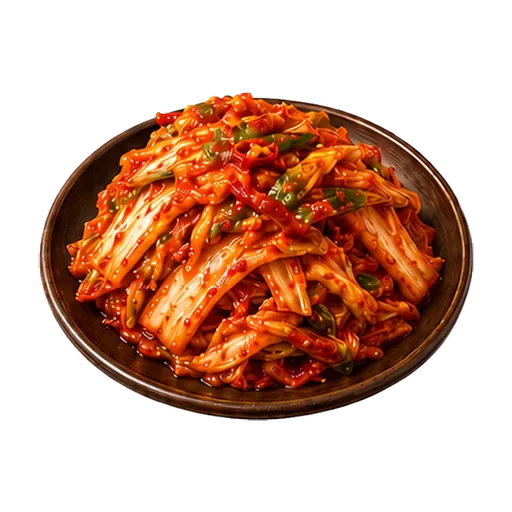
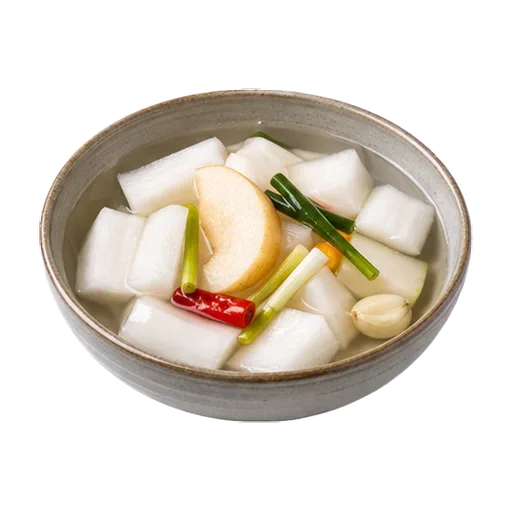
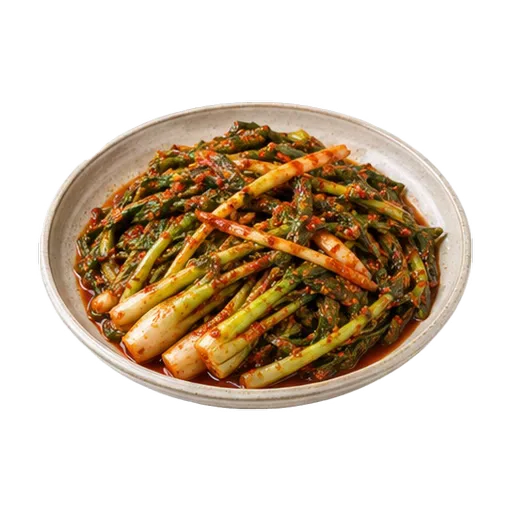
The name comes from yeorin mu, meaning young radish, the thin summer radish that is at its most tender once the heat arrives. Korean reference works record it as an ordinary household kimchi bound with a wheat-flour or rice paste instead of salted seafood and eaten all summer with noodles or stirred into barley rice; around Jeonju the paste is made by grinding seeded chilies, ginger, and garlic in a stone mortar together with rice.
Fun fact
No fish sauce (jeotgal) is used in yeolmu kimchi because of the summer heat.
In the Jeonju style, red pepper, ginger, and garlic are ground with cooked rice into a paste before mixing.
Dish notes
- Local tradition
- Midsummer kimchi tradition
- Main ingredients
- Radish Greens, Gochugaru, Garlic
- Texture
- Crunchy
- How it's served
- Chilled
- Pairing
- Boribap
Availability
It is a summer kimchi commonly served with noodles or mixed into barley rice.