History
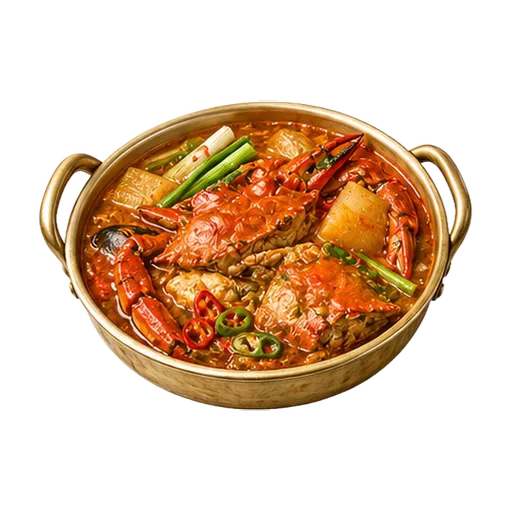
The blue crab is recorded in the Jasan Eobo, the marine treatise Jeong Yak-jeon wrote in 1814 during his exile on Heuksando. He lists it under the name sihae and notes that its fan-shaped hind legs let it swim, unlike other crabs, that its taste is sweet, and that it was scarce off Heuksando but netted in the Chilsan sea. Its Korean name is traced to gotge, from an old word for a skewer, after the two spines on the carapace. Joseon cookbooks show crab was ordinary food by then, steamed, salted into jang, or simmered as this stew.
Fun fact
Kkotge means flower crab, the Korean name for the blue swimming crab.
Korean cooks look for female crabs with roe in spring and male crabs in autumn.
Dish notes
- Local tradition
- West-coast crab season dish
- Iconic spot
- Soraepogu Fish Market, Namdong-gu, Incheon
- Main ingredients
- Blue Crab, Radish, Doenjang
- Texture
- Tender
- How it's served
- Hot
- Pairing
- Soju
Ordering tip
The broth is kept clean and savory by boiling the crabs first and adding vegetables and doenjang without other seafood.