History
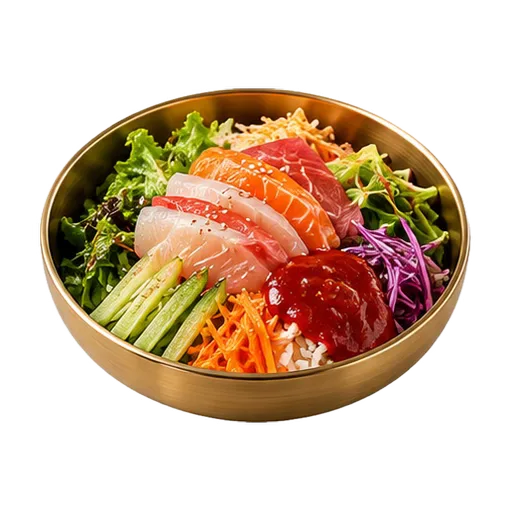
Hoe-deopbap is Korean, but its name carries an argument about where it came from. In practice it is closer to a bibimbap, since it is mixed through with chogochujang rather than eaten in layers, yet it is called a deopbap, the Korean reading of the Japanese donburi. That is why it is generally taken to be a Japanese rice-bowl form that was subsequently turned into a bibimbap. Chirashizushi is often named as the ancestor, though the closer Japanese parallel is kaisendon. No record settles it.
Fun fact
It is dressed with chogochujang, gochujang loosened with vinegar and sugar, rather than with soy sauce and wasabi.
The bowl is stirred together thoroughly before eating, in the same way as bibimbap.
Dish notes
- Local tradition
- Coastal raw-fish rice bowl
- Iconic spot
- Jagalchi Market, Nampo-dong, Busan
- Main ingredients
- Raw Fish, Rice, Gochujang Sauce
- Texture
- Tender
- How it's served
- Cold
- Pairing
- Miyeokguk
Ordering tip
The dish is served with chogochujang sauce, and the diner mixes all ingredients together in the bowl before eating.