History
How rice balls began is not documented, since pressing cooked rice into a lump by hand requires no technique, but the Korean records are old: the Annals of the Joseon Dynasty note gwaban, rice packed around boiled beans, and Joseon literature describes woodcutters carrying bean-and-sesame rice balls as a packed lunch. In the twentieth century jumeokbap worked as a ration, feeding troops during the Korean War and, in May 1980, being cooked in volunteer kitchens by Gwangju residents for the citizen militia during the uprising. It returned as a cheap ready meal during the 1997 Asian financial crisis, and commercial versions multiplied through the 2010s.
Fun fact
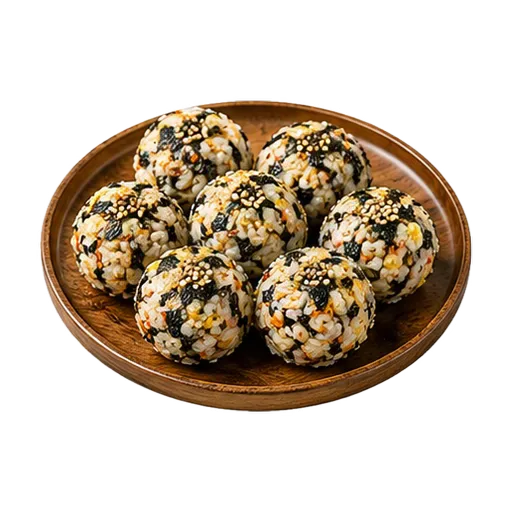
The name comes from jumeok, the Korean word for fist, after the way the rice is squeezed into shape.
Modern versions are usually rolled in crumbled gim and sesame seeds before serving.
Dish notes
- Local tradition
- Packed-lunch and picnic staple
- Main ingredients
- Rice, Seaweed, Sesame Oil
- Texture
- Sticky
- How it's served
- Room Temperature
- Pairing
- Dakbal
Ordering tip
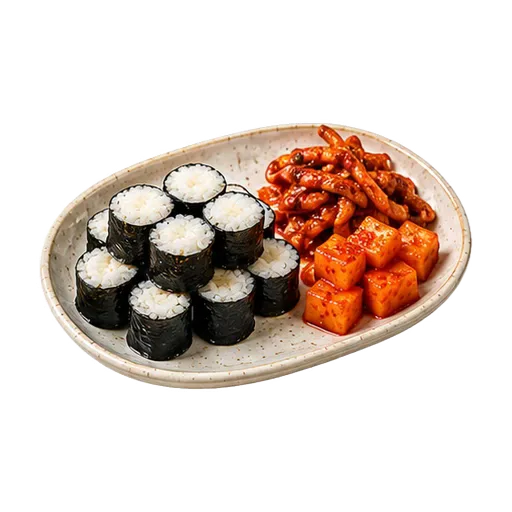
Jumeokbap is a portable meal or snack often served alongside spicy foods.