History
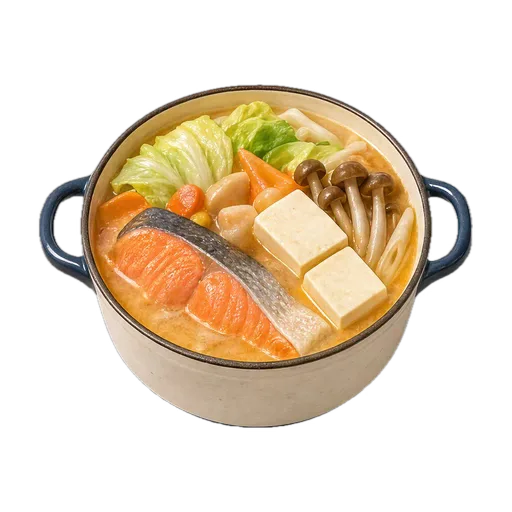
Salmon fishing has been prosperous in the Ishikari River area since the Edo period. The dish originated as a fisherman's meal in the Ishikari region, where fresh salmon was abundant; in the Meiji era, the restaurant Kintai-tei (founded 1880) adapted the local dish by adding Western vegetables and popularized it. It became nationally known in the mid-20th century when it was served to tourists watching salmon beach seine fishing.
Fun fact
The name 'Ishikari nabe' comes from the Ishikari River, known for its salmon runs.
Ishikari City has designated September 15 as 'Ishikari Nabe Day' and holds events to promote the dish.
Dish notes
- Local tradition
- Hokkaido fishermen's salmon pot
- Iconic spot
- Kindaitei, Ishikari, Hokkaido
- Main ingredients
- Salmon, Miso, Cabbage
- Texture
- Tender
- How it's served
- Hot
- Pairing
- Sake
Ordering tip
Salmon chunks and vegetables are simmered in kombu dashi, then miso is added; the hot pot is finished with a sprinkle of sansho pepper and sometimes topped with ikura (salmon roe).
Availability
It is a winter staple that warms the body.