History
The dish first appears in Korean cookbooks and newspapers in the 1930s, though similar platters date back to the Goryeo period. It may have been influenced by Chinese chun bing (spring pancakes).
Fun fact
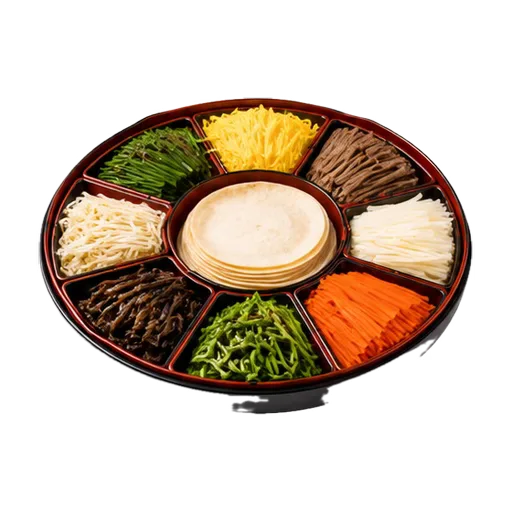
The nine compartments symbolize Korean ideas of five colors, yin-yang, harmony, and balance.
Typical fillings include beef, abalone, sea cucumber, mushrooms, cucumber, carrot, mung bean sprouts, water dropwort, and egg yolk and white garnish (jidan).
Dish notes
- Local tradition
- Royal court hospitality dish
- Main ingredients
- Crepes, Vegetables, Meat
- Texture
- Delicate
- How it's served
- Room Temperature
Ordering tip
Place a pancake on a plate, add a selection of fillings, and wrap it with a dipping sauce of mustard (gyeojajang) or vinegar soy sauce (chojang).
Availability
It is served at banquets, ancestral rites, and special occasions, as an appetizer or accompaniment to alcohol.