History
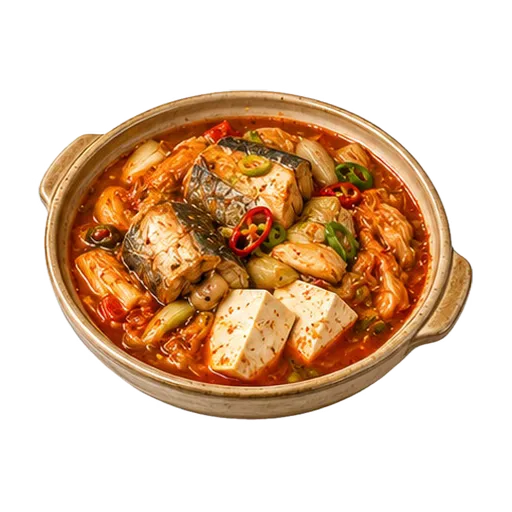
Dongtae is frozen pollock, written with the character for freezing, and the stew follows the freezing rather than the fish. Pollock was the most common catch in Korean waters, with over 270,000 tonnes landed in the East Sea in 1940, and the frozen form is understood to have reached Korean markets from the 1930s, which is what let the stew be cooked away from the winter coast. The fish's name is traced to Myeongcheon county in Hamgyong, where a fisherman surnamed Tae is said to have landed one for a provincial governor who had no name for it.
Fun fact
Korean has separate names for pollock by treatment: saengtae is fresh, dongtae is frozen, bugeo is wind-dried.
Korea closed its own pollock fishery in 2019 after the domestic catch collapsed, so the fish in the pot is now largely imported.
Dish notes
- Local tradition
- Winter pollock home stew
- Main ingredients
- Pollock, Radish, Tofu
- Texture
- Flaky
- How it's served
- Hot
- Pairing
- Soju