History
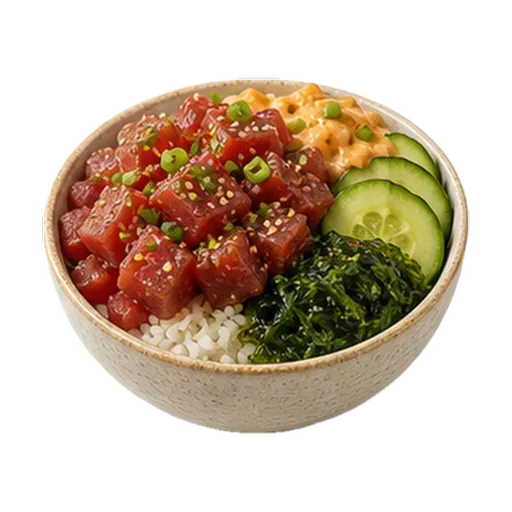
Poke grew from ancient Hawaiian life: within the ahupua'a land system, ocean protein moved inland in trade for plants, and raw fish was a prized delicacy. Early Hawaiians salted catch with pa'akai sea salt and seasoned it with 'inamona, roasted kukui nut crushed with salt, plus limu seaweed. Western observers recorded the practice by the late eighteenth century, and later Japanese and other immigrant flavors layered onto the tradition. The contemporary global poke bowl descends from these island origins.
Fun fact
Fishermen in old Hawaii seasoned their catch crosswise-cut with sea salt, roasted kukui nut, and seaweed.
The Hawaiian word poke simply means to slice, describing how the fish is cut.
Dish notes
- Local tradition
- Everyday Hawaiian snack and party food
- Main ingredients
- Raw ahi tuna, Sea salt, Limu seaweed
- Texture
- Silky
- How it's served
- Cold
Ordering tip
Buy it by weight at island grocery counters; shoyu and spicy ahi are the standards
Availability
Island-wide in Hawaii from supermarkets and poke shops; mainland bowls are a separate evolution
What defines it
- crosswise-diced raw fish
- sea salt and roasted kukui nut ('inamona) seasoning
- limu seaweed tradition