History
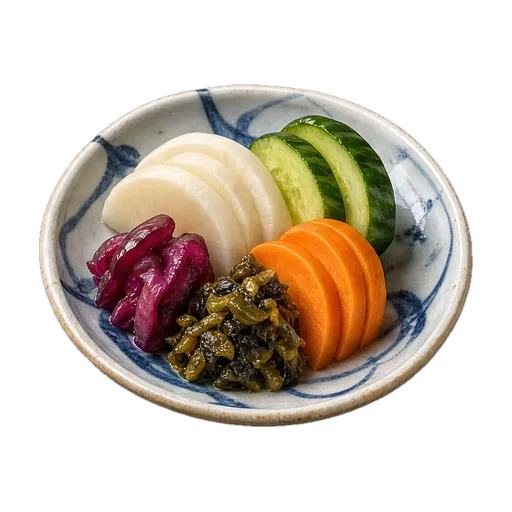
Tsukemono have ancient origins, with Jōmon-period vegetable salt pickling, a Heian-period mokkan record of salt-pickled melon, many types listed in the Engishiki, and a tsukemono industry that arose in the Edo period alongside the spread of restaurants and cookbooks.
Fun fact
Over 600 regional varieties are tied to local climate; cold regions such as Akita developed preservation techniques such as iburigakko.
Drying is also used as a preservation step, as in the case of dried daikon for takuan.
Dish notes
- Local tradition
- Centuries-old preserving tradition
- Iconic spot
- Nishiki Market, Kyoto
- Main ingredients
- Vegetables, Salt, Rice Bran
- Texture
- Crunchy
- How it's served
- Room Temperature
- Pairing
- Rice
Ordering tip
Eaten as an everyday accompaniment to rice or as part of osechi.