History
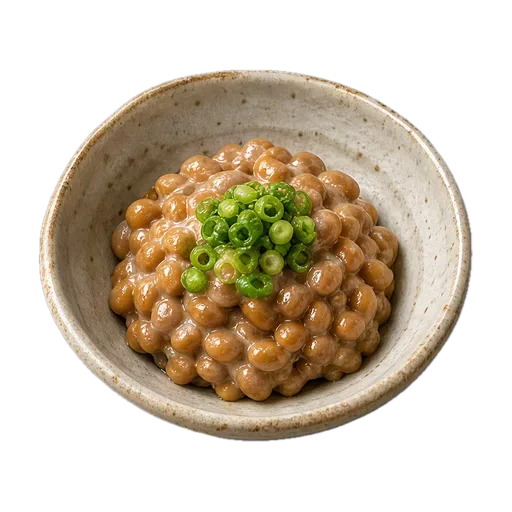
Nattō's origins are uncertain but may trace to the Yayoi or Heian period; a legend attributes Mito nattō to the Heian warrior Minamoto no Yoshiie, whose boiled beans wrapped in straw turned sticky and tasty. Mito nattō became widely known after the 1889 opening of the Mito Railway, when small-bean nattō was sold at Mito Station as a souvenir praised as 'small beans, delicious'.
Fun fact
The name may come from nasso, a temple kitchen where monks relied on it for protein.
Multiple regions including Mito (Ibaraki) and present-day Yokote (Akita) claim to be nattō's birthplace; Yokote links the dish to the Later Three-Year War (1083-1087) and Minamoto no Yoshiie.
Dish notes
- Local tradition
- Breakfast staple of eastern Japan
- Iconic spot
- Tengu Nattō Sasanuma Sōhonten, Mito, Ibaraki
- Main ingredients
- Fermented Soybeans
- Texture
- Sticky
- How it's served
- Room Temperature
- Pairing
- Rice