History
Accounts place the pastry's origin in Guangxi, either Wuzhou or Liuzhou, made with taro from Lipu and already part of Liuzhou teahouse life by the Qing dynasty. It spread through the Cantonese rotating dim sum menus of the 1930s, and the Shanghai food company Guan Sheng Yuan advertised a diced-chicken Lipu taro version in 1935; the technique is now listed as intangible cultural heritage in Guangzhou's Haizhu District.
Fun fact
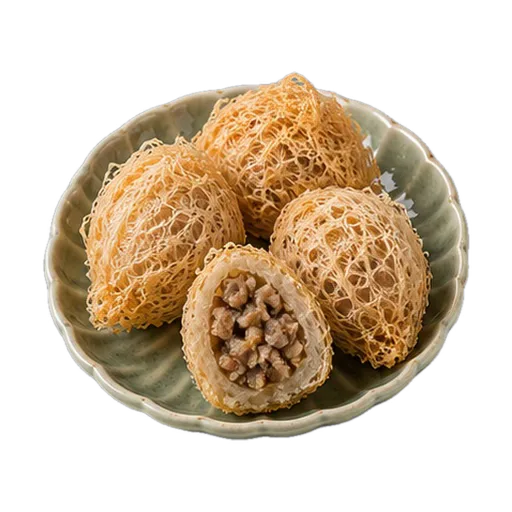
The honeycomb shell forms in the fryer when moisture in the fat-enriched taro dough turns to steam and blows.
蜂巢 means honeycomb, which is a description of the fried crust rather than an ingredient.
Dish notes
- Local tradition
- Deep-fried yum cha classic
- Iconic spot
- Lin Heung Tea House, Central
- Main ingredients
- Taro, Pork, Mushrooms
- Texture
- Crispy
- How it's served
- Fried
- Pairing
- Pu-erh tea