History
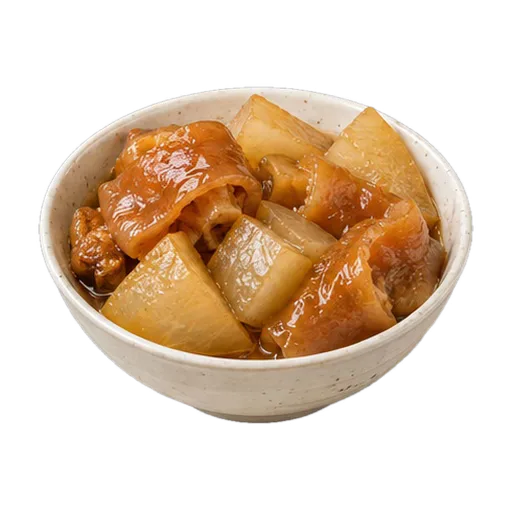
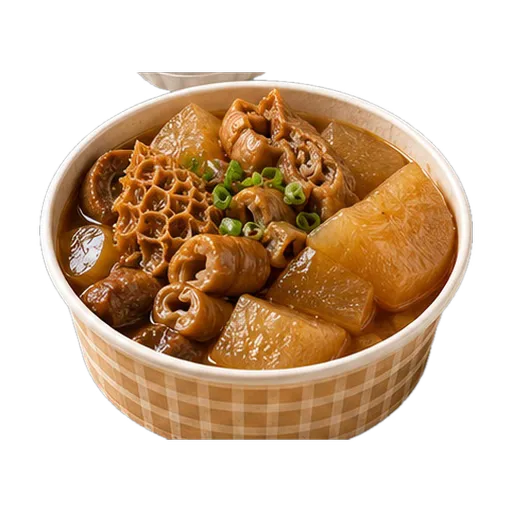
The dish traces to late Qing Guangzhou, to the Hui Muslim quarter around the Guangta Mosque, where a cook noticed that lung, intestine and tripe were thrown away after each slaughter and put them to use with radish, slow-cooked for hours in a spiced sauce. Pork was off the table for that community and meat was scarce, so the offal filled a real gap, and the snack spread across Guangdong from there. Eating it standing at the stall became the usual way to take it.
Fun fact
The offal is lifted from the pot and cut with scissors to order, straight into the bowl or cup.
The daikon simmers in the same braise and is often ordered on its own.
Dish notes
- Local tradition
- Old-school street-cart snack
- Iconic spot
- Temple Street Beef Offal, Yau Ma Tei
- Main ingredients
- Beef Offal, Daikon, Broth
- Texture
- Tender
- How it's served
- Hot
- Pairing
- Curry fish balls