History
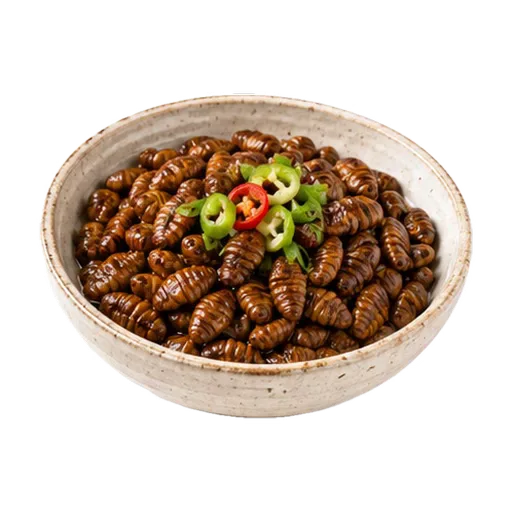
Beondegi became a popular street food in the 1960s–1970s when the government-promoted sericulture industry mass-produced pupae, and urbanization created demand for cheap, high-calorie snacks.
Fun fact
The pupae are a byproduct of silk reeling, left behind once the cocoons are unwound for thread.
They are sold both from street carts and in cans on Korean supermarket shelves.
Dish notes
- Local tradition
- Retro street-cart snack
- Iconic spot
- Gwangjang Market, Jongno, Seoul
- Main ingredients
- Silkworm Pupae
- Texture
- Chewy
- How it's served
- Hot
- Pairing
- Soju
Availability
Commonly sold as street food in cups or as a hot soup (beondegi-tang), and also available canned.