History
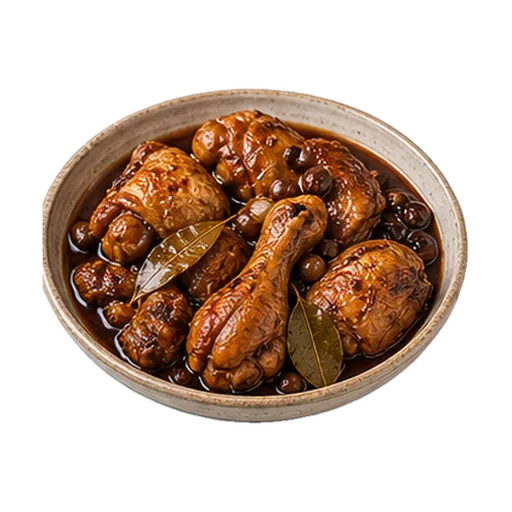
Philippine adobo began as an indigenous vinegar-and-salt preservation method; Spanish colonizers attached the name adobo by resemblance to their own dish, and soy sauce entered through Chinese trade.
Fun fact
Its name came from Spanish observers who saw a resemblance to their own adobo.
Before soy sauce arrived, salt and vinegar alone did the preserving and seasoning.
Dish notes
- Local tradition
- Filipino home-kitchen signature
- Main ingredients
- Chicken or pork, Soy sauce, Vinegar
- Texture
- Tender
- How it's served
- Hot
- Pairing
- Steamed white rice
Ordering tip
Pair the saucy version with plenty of steamed rice
Availability
Home cooking and carinderia staple; every region keeps its own variant
What defines it
- soy-vinegar braise
- garlic and bay aromatics
- glossy reduced sauce