History
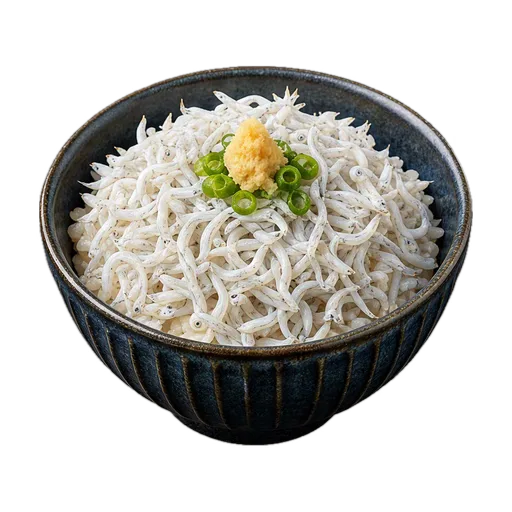
Whitebait has been netted off the Shonan coast since the Edo period, but the catch was then processed into sheets of tatami-iwashi; boiled kama-age shirasu was eaten only by the fishing families themselves, and raw shirasu was not eaten at all. Kettle-boiling and later refrigeration let both the boiled and the raw fish be processed and sold direct, helped by Sagami Bay's fishing grounds sitting close inshore, and the bowl became a local specialty around Chigasaki, Kamakura and Enoshima.
Fun fact
Raw whitebait is mostly eaten near the landing port because it spoils quickly.
It is a local specialty of coasts with whitebait fisheries, notably Shonan in Kanagawa and Suruga Bay in Shizuoka.
Dish notes
- Local tradition
- Shonan coast harbor specialty
- Iconic spot
- Tobiccho, Enoshima, Kanagawa
- Main ingredients
- Whitebait, Rice, Ginger
- Texture
- Delicate
- How it's served
- Raw
- Pairing
- Miso Soup
Availability
Major coastal production regions famous for shirasudon include the Shōnan coast in Kanagawa, Suruga Bay in Shizuoka, and Yuasa in Wakayama.