History
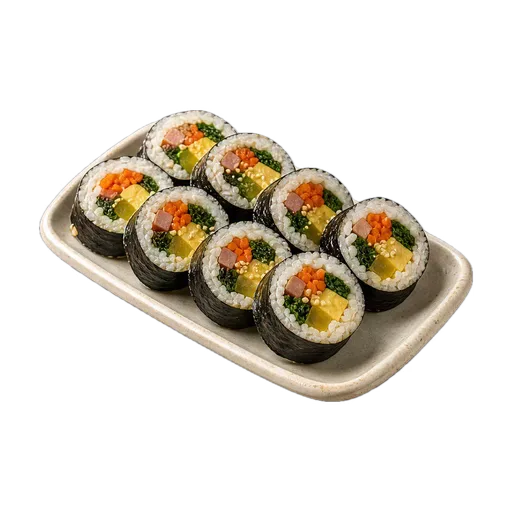
The origin of gimbap is debated: some trace it to Japanese norimaki introduced during the colonial period, while others link it to the traditional Korean bokssam, a seaweed rice wrap eaten on Daeboreum. The modern form became popular in the mid-20th century, with ham and processed foods added in the 1980s and gimbap specialty shops spreading in the 1990s.
Fun fact
This is considered a Korean soul food, associated with outings, picnics, and convenience.
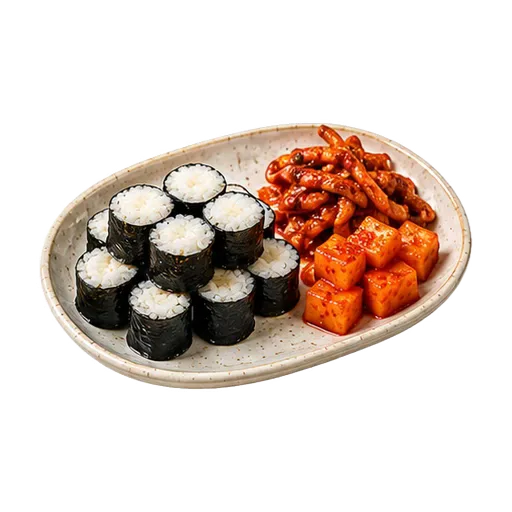
Chungmu gimbap from Tongyeong is a regional variant of rice-only rolls served with spicy radish kimchi and seasoned squid.
Dish notes
- Local tradition
- Picnic and packed-lunch staple
- Iconic spot
- Gwangjang Market, Jongno, Seoul
- Main ingredients
- Rice, Seaweed, Vegetables
- Texture
- Chewy
- How it's served
- Room Temperature
- Pairing
- Tteokbokki
Ordering tip
It is commonly served as a portable snack or light meal, often accompanied by pickled radish or soup.