History
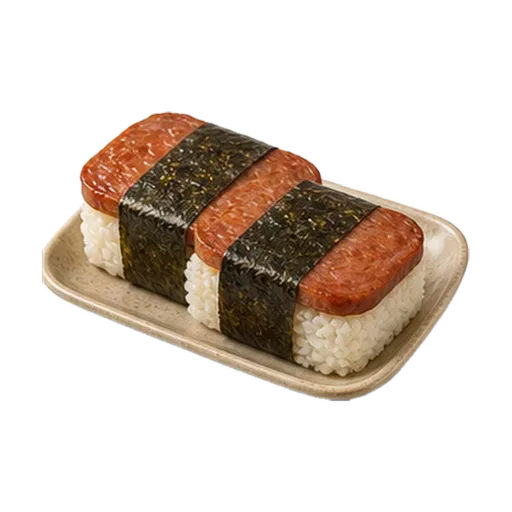
Spam reached Hawaii with American troops during and after World War II and stayed embedded in local cooking. The combined term appeared in print only in 1987, and most origin accounts credit Mitsuko Kaneshiro, who began making the snack around 1963; earlier internment-camp precursors are also claimed.
Fun fact
The combined term first appeared in print in 1987, promoting Hawaii's Spam Cookbook.
An acrylic pressing mold standardized the rectangular shape and made mass production easy.
Dish notes
- Local tradition
- Convenience-store grab-and-go snack
- Main ingredients
- Spam, Rice, Nori
- Texture
- Soft
- How it's served
- Room Temperature
Ordering tip
Buy one at a convenience-store counter and eat it the same day
Availability
Ubiquitous across Hawaii convenience stores; mainland Hawaiian barbecue restaurants also carry it
What defines it
- grilled Spam slice over pressed rice
- nori wrap
- soy-sauce glaze
How to tell it apart
- Onigiri: Onigiri encloses fillings inside seasoned rice; Spam musubi tops the rice with a grilled glazed Spam slice under a nori band.