History
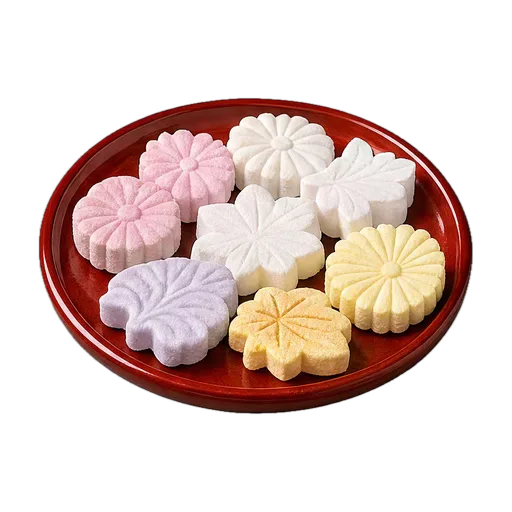
As rakugan spread nationwide, confectioners began shaping it to suit seasons and local settings. A shop in Katada, Otsu, Shiga, still uses wooden molds over 100 years old, while modern 3D-printed molds are now also used. The name rakugan, meaning descending geese, is said to come from Katada, where geese landing on the lake inspired the sweet, and black sesame on white cake resembles geese on the water.
Fun fact
The name rakugan means descending geese, after geese seen landing on a lake at Katada in Shiga.
High-quality wasanbon sugar is often used, and matcha or cinnamon may be added for color.
Dish notes
- Local tradition
- Tea ceremony dry sweet
- Iconic spot
- Morihachi, Kanazawa
- Main ingredients
- Rice Flour, Sugar
- Texture
- Firm
- How it's served
- Molded
- Pairing
- Matcha
Ordering tip
Rakugan keeps for up to a year, so it is suitable as a temple offering as well as a tea sweet.