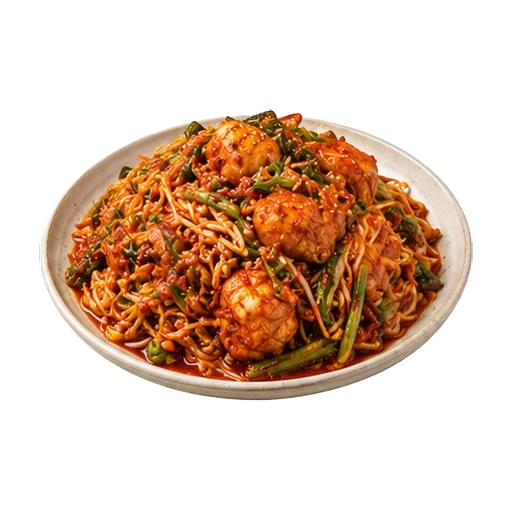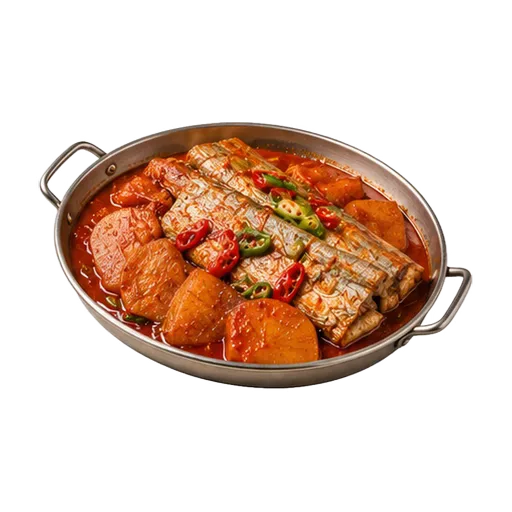
History
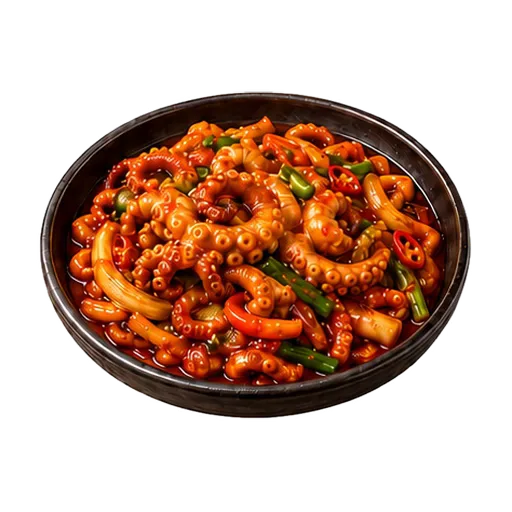
The dish originated in the Seorin-dong area of Jongno-gu, Seoul, where a concentration of nakji bokkeum restaurants formed the so-called 'Mugyo-dong Nakji Alley' after urban redevelopment dispersed them. In the 1970s to 1990s, the spicy dish became a symbol of endurance for downtown Seoul office workers, known as salarymen.
Fun fact
The Mugyo-dong style uses heavy minced garlic, giving a sharp, pungent heat rather than just chili heat.
Nakji bokkeum and sannakji, live octopus, are considered the most representative octopus dishes in modern Korea.
Dish notes
- Local tradition
- 1960s Seoul spicy standby
- Iconic spot
- Nakji Alley, Mugyo-dong, Seoul
- Main ingredients
- Octopus, Gochujang, Onion
- Texture
- Springy
- How it's served
- Hot
- Pairing
- Kongnamul-guk
Ordering tip
It is served as a main dish with rice or as anju with alcohol, often accompanied by kongnamul-guk, bean sprout soup, or clam soup to soothe the stomach after the spicy meal.