History
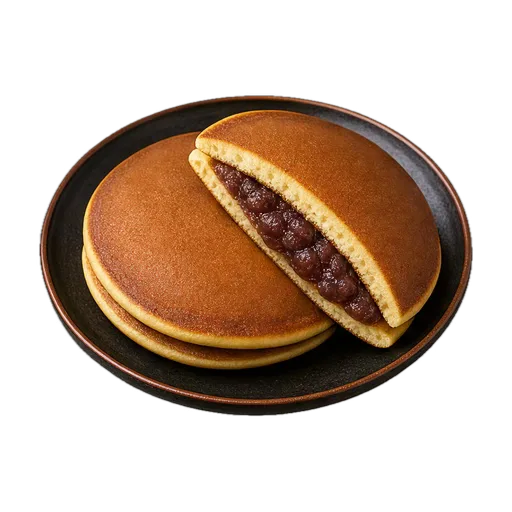
The prototype was 'sukesō-yaki' in the early Edo period, a thin pancake folded around anko. The round shape appeared in the early Meiji period, and the modern two-layer form was established in the Taisho period (1914) by Usagiya in Ueno, Tokyo.
Fun fact
Its gong-like shape inspired the name, though legend says one was cooked on a gong.
It is also known as 'Mikasa' or 'Mikasa-yama', with slight differences in preparation such as sealed edges.
Dish notes
- Local tradition
- Classic teatime confection
- Iconic spot
- Usagiya, Ueno, Tokyo
- Main ingredients
- Flour, Eggs, Bean Paste
- Texture
- Fluffy
- How it's served
- Room Temperature
- Pairing
- Green Tea