History
Chile growing anchored itself in Pueblo County's Arkansas River valley in the early 1900s, when farmers began locally selecting Mirasol-type peppers. A grower named Bartolo spent years stabilizing one exceptional plant he named the Mosco, shared seed with neighbors in the early 2000s, and the fleshy, medium-hot pod became the backbone of modern Pueblo chile. Late-summer roadside roasting marks the season, and families guard green chile recipes descended from Hispanic, Italian, and Eastern European kitchens that met in the steel city.
Fun fact
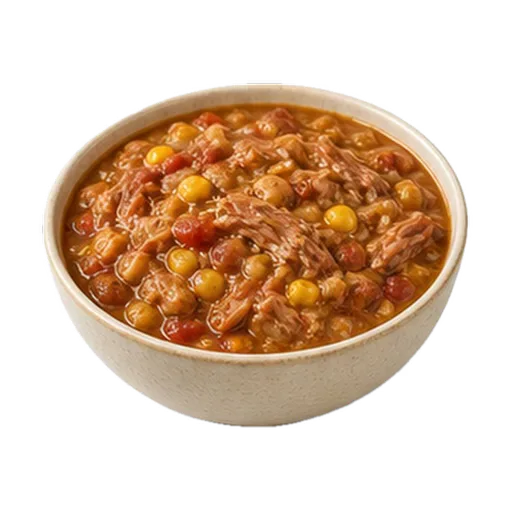
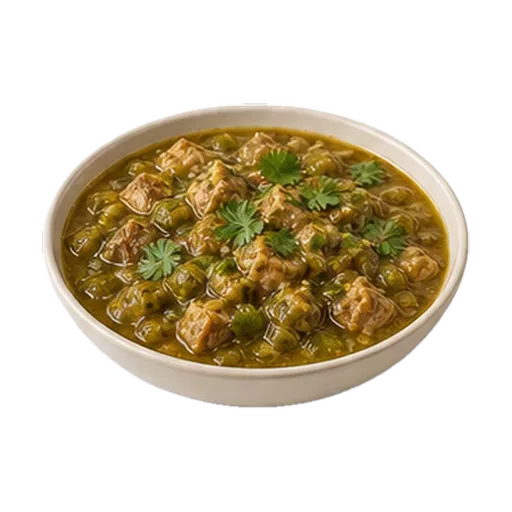
Roasted Pueblo chiles simmer with pork into a thick sauce that smothers everything from burgers to breakfast.
Farmers spent generations locally selecting the Mirasol pepper into today's Mosco variety.
Dish notes
- Local tradition
- Late-summer Pueblo chile roasting season
- Main ingredients
- Roasted Pueblo chiles, Pork, Tomatoes
- Texture
- Tender
- How it's served
- Hot
Ordering tip
Order it as a bowl with tortillas, or ask for anything on the menu 'smothered'
Availability
A Colorado staple in fall; frozen roasted chiles carry it through the year
What defines it
- roasted Mirasol-Mosco type green chiles
- slow-simmered pork base
- dual role as bowl stew and smothering sauce
How to tell it apart
- Central Texas Smoked Brisket: Central Texas brisket is dry-rubbed smoked beef sliced plain; Colorado green chile is a saucy pork-and-roasted-pepper stew used over other foods.