History
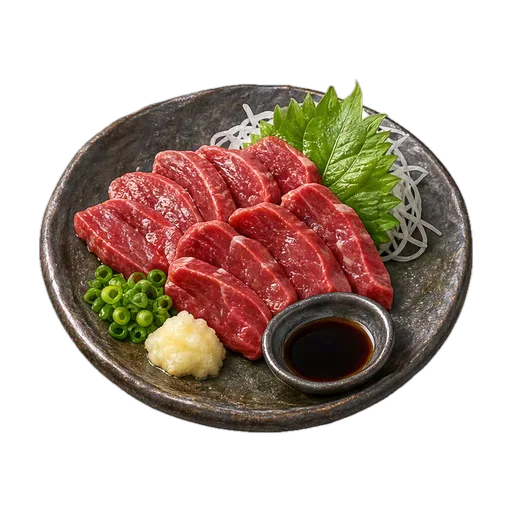
A common legend traces the practice to the 1590s, when Kumamoto lord Kato Kiyomasa ate raw horse meat during a military campaign in Korea. In Fukushima, basashi spread after the Boshin War when horse meat was given to the wounded, and raw consumption became popular after a pro wrestler visited Aizu-Wakamatsu.
Fun fact
This joins karashi renkon and ikinari dango as Kumamoto's three great local specialties.
Dish notes
- Local tradition
- Kumamoto raw horse delicacy
- Iconic spot
- Suganoya, Kumamoto
- Main ingredients
- Horse Meat, Soy Sauce, Garlic
- Texture
- Tender
- How it's served
- Chilled
- Pairing
- Shochu
Ordering tip
Fresh horse meat is sliced thinly against the grain and served immediately; it is often kept chilled until cutting to preserve color. It is commonly eaten with sweet soy sauce, and in Fukushima it is often paired with karashi miso (spicy mustard miso).
Availability
Basashi is strongly associated with Kumamoto Prefecture, Japan's leading producer of horse meat, though it is also eaten in Yamanashi, Fukushima, and other regions.